May 9, 2026
Write It for Us! Commissioning New Works for Everyday Singers
PODIUM 2026 – Interest Session (PODIUM 2026: Canada’s national bilingual choral Conference and Festival – May 14 – 17, 2026. University of Victoria
Write It for Us! – Commissioning New Works for Everyday Singers
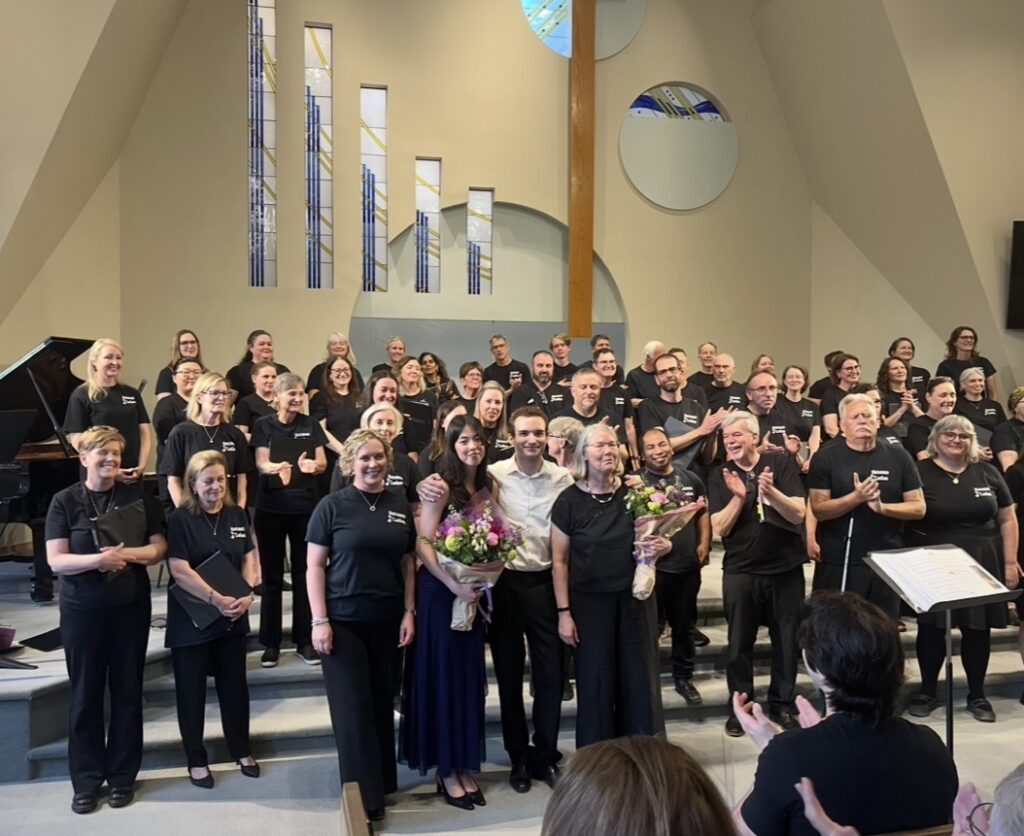
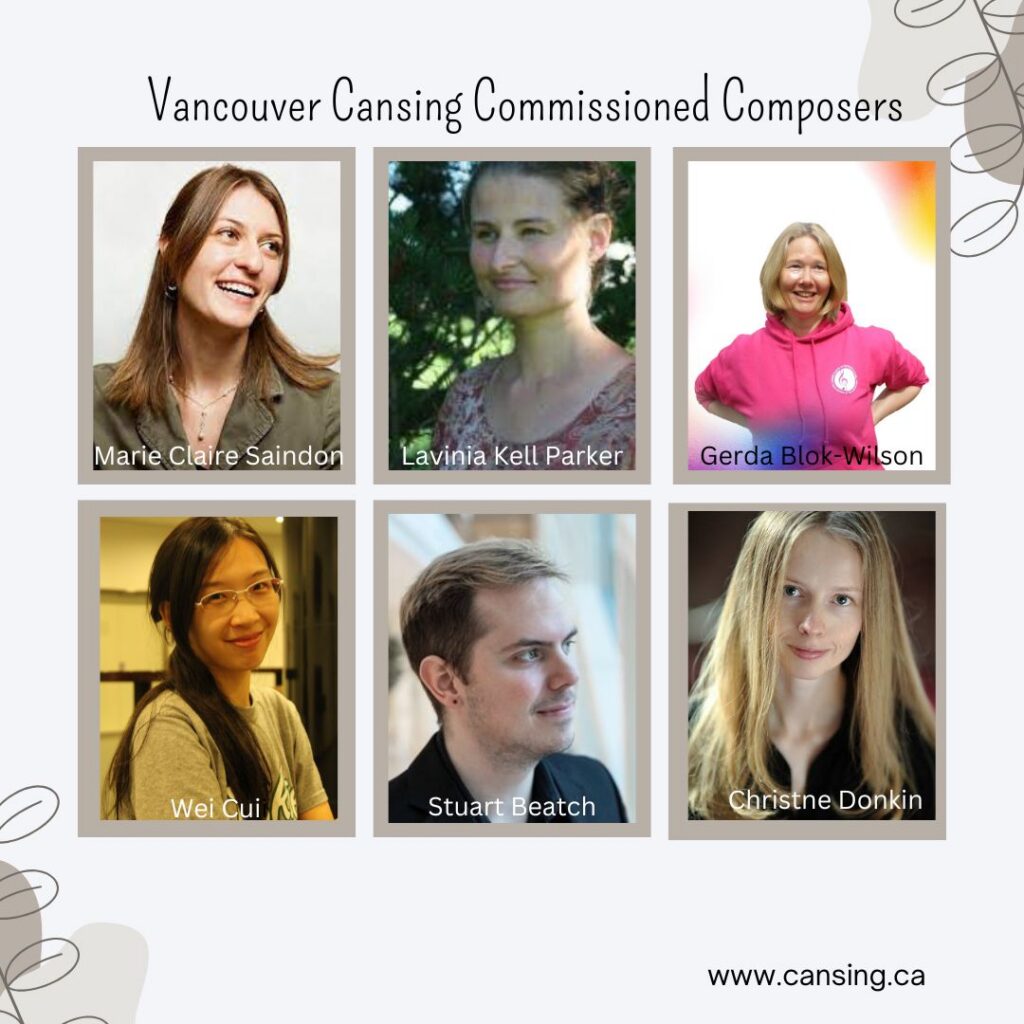
Gerda Blok-Wilson and composers who have written for Vancouver Cansing Choir
Friday, May 15 • 3:45–4:45pm
Saturday, May 16 • 10:30–11:30am
Room A169
What happens when a community choir becomes the commissioner?
This session explores how commissioning new works for non-auditioned, mixed-level choirs can foster artistic excellence, inclusion, and collaboration. Gerda Blok-Wilson, Artistic Director of Vancouver Cansing Community Choir, shares insights from an annual commissioning initiative supporting Canadian composers including Marie-Claire Saindon, Stuart Beatch, Lavinia Kell Parker, Wei Cui, and Christine Donkin.
Through excerpts, scores, and rehearsal stories, participants will explore practical approaches to commissioning accessible SATB/SSAB repertoire that challenges and inspires everyday singers while remaining artistically meaningful.
Session Focus
• Commissioning for developing choirs
• The Vancouver Cansing model
• What works in rehearsal
• Musical techniques that “hook” singers
• Writing artistically for mixed-level ensembles
• Singer reflections and composer insights
Featured Commissions
• I Catch My Breath and Sing – Lavinia Kell Parker
• Good Rain – Wei Cui
• Long Range Forecast – Stuart Beatch
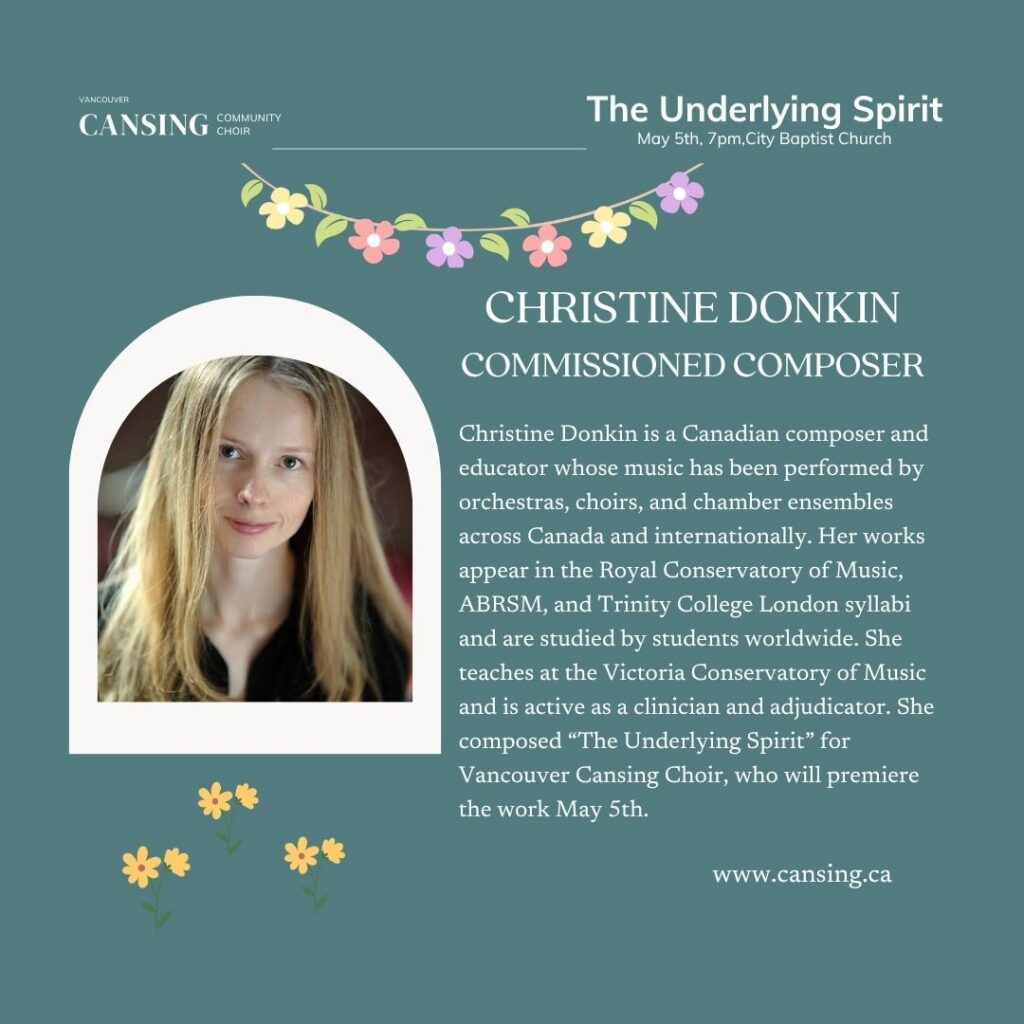
• The Underlying Spirit – Christine Donkin
• Flying – Marie-Claire Saindon
• The Song My Paddle Sings – Gerda Blok-Wilson
Introduction: Gerda Blok-Wilson
When we hear the title Write It for Us, who do we imagine that “us” might be?
A professional choir? A university ensemble? An advanced chamber choir?
But what if “us” simply means an everyday community choir?
Then all kinds of questions start to come up.
Is this actually possible for our choir?
Can we afford it?
Will the singers be able to sing it — and maybe even enjoy it?
How would it fit into limited rehearsal time?
Those are exactly the kinds of questions I’ve asked myself as a conductor, and today I’d like to share a little about the Vancouver Cansing Community Choir model. It’s definitely not a one-size-fits-all approach, but my hope is that it might spark ideas for what commissioning could look like in your own choral community — and maybe help build a stronger culture of commissioning across Canada.
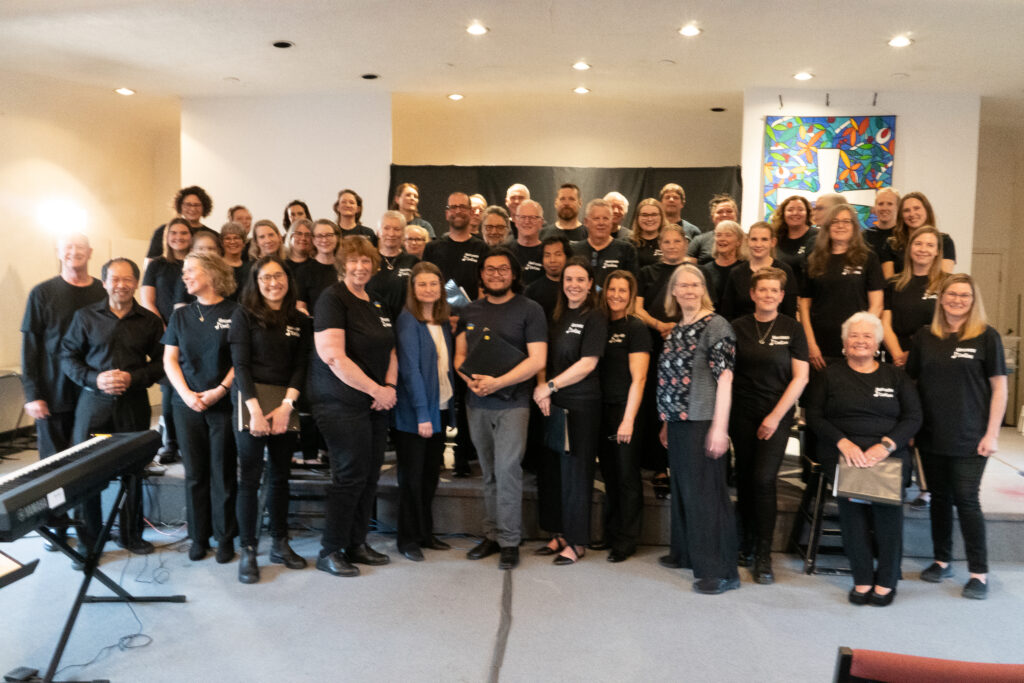
Vancouver Cansing Choir is generally a group of 60 – 65 non-auditioned singers—a wide range of ages, backgrounds, and musical experience. A vibrant, committed musical community with lots of social ties. We work with a professional collaborative pianist who is able to assist with rehearsals and sectionals.
Like many community choirs, we have more sopranos and altos—but our tenor and bass section has been steadily growing each year.
Some are strong readers.
Some learn primarily by ear.
Some are returning to singing after many years away.
What have we been doing?

Over the past few years, we’ve worked closely with composers to create brand new choral works specifically for Vancouver Cansing. The commissions are intentionally designed to be manageable and sustainable within a community choir setting.
You can check out the Vancouver Cansing Budget but typically, the pieces are around three minutes in length, financially accessible—usually in the range of about $1800–$2000 per commission—and carefully tailored to the musical growth and skill development of the ensemble. A portion of each singer’s membership fee, currently $185 per session, helps support these commissions directly. There are other ways to fund commissions and you can check these out by clicking the link.
What’s especially important to us is that the music feels artistically meaningful while still being achievable and rewarding for everyday singers. The goal isn’t to make the music “easy,” but to introduce something new that stretches the choir just beyond their comfort zone in a way that feels exciting and possible.
So we think carefully about things like:
• whether the piece can realistically be prepared within the rehearsal time available before performance – for us it’s 14 rehearsals.
• creating moments where the choir can sound successful quite quickly, even while exploring unfamiliar harmonies, textures, or languages
• melodic repetition and sequences that help build confidence and musical memory
• approachable time signatures and key signatures
• vocal ranges that work comfortably for developing singers
• and strong storytelling through text, dynamics, and colour
All of those elements help singers feel both challenged and supported at the same time.
The Unusual Part: Commissioning for beginning to moderate-level choirs
In my experience, it’s still rare for beginning to moderate-level choirs to commission new works. I work with more advanced choirs as well and traditionally, commissioning in choral music has been led by professional ensembles, advanced chamber choirs, universities and larger church choirs.
These are groups with musicians with strong reading skills, larger budgets and more knowledge with the commissioning process.
Recently, I heard from a conductor in Dublin, Ireland, who was wondering how he could access this workshop and bring a regular commissioning element into his own choir. I think that really shows there’s a genuine interest from conductors and choirs who want to start building this kind of creative process into their ensembles.
The Big picture for Vancouver Cansing Choir – Christine Donkin. 2026 Commissioned Composer.
As the conductor of a non-auditioned community choir, I’ve tried to rethink what commissioning can look like for more novice and everyday singers. Instead of simply being consumers of repertoire—often purchasing music that comes largely from south of the border—I wanted the choir to become collaborators in helping create new Canadian repertoire that truly reflects and supports community singers.
That shift changes a lot of things. It affects how composers approach the writing, how singers connect to the music, and even how the music functions in rehearsal. The singers know the piece was written with them in mind, and that creates a very different kind of engagement and investment in the process.
Why does it work for us?
When a piece is written specifically for Vancouver Cansing, something really changes in the choir. The singers feel a genuine sense of ownership and pride because the music was created with their voices, experiences, and abilities in mind. They connect more deeply to the theme of the piece, and very often they rise to the challenge of learning something completely new. In fact, many of the pieces become favourites that they immediately want to sing again.
There’s a real feeling of: “This was written for us. We can do this.”
That’s incredibly empowering for a community choir. It builds confidence, curiosity, and a willingness to take musical risks together.
And our hope is always that the piece will go on to have a life beyond Vancouver Cansing as well — through school choirs, community choirs, and other ensembles looking for meaningful, accessible new Canadian repertoire.
How does the Vancouver Cansing process work?
Usually, the process begins about a year in advance. I try to keep the choir informed along the way — both through emails and during rehearsals — so they feel part of the journey from the very beginning.
I’ll usually reach out to a composer whose work I’ve researched carefully, someone I feel might connect well with the spirit and abilities of the Vancouver Cansing Choir. From there, we begin a conversation about who the choir really is — our vocal range, our strengths, the way we learn, and even some of the challenges that naturally come with a mixed-level community choir.
The spring concert theme often helps shape the direction, but beyond that, the process is intentionally open. We talk together about possible texts, themes, atmosphere, length, and overall scope so the piece feels artistically exciting, but also genuinely singable and meaningful for the ensemble. I also share previous commissions so composers can get a sense of the choir and what has worked well in rehearsal and performance.
From there, the communication continues through the fall as the composer writes. The score is usually delivered around the third week of January, which gives us several months to rehearse before the premiere at our first Tuesday in May concert.
What’s especially meaningful is that the singers have time to really live with the music — not just learn the notes and rhythms. Over the years, we’ve also developed a tradition of bringing each commissioned piece back the following season, and that second performance makes an enormous difference.
By then, the choir sings with much more confidence, a deeper understanding of the piece, and a real sense of ownership because of everything they discovered during that first year of living with the music together.
What to listen for from the excerpts of the commissioned pieces
Today, you’re going to hear a series of short excerpts from these commissioned works.
As you listen, ask yourself:
What musical ideas or techniques are being introduced?
How does the writing support the singers?
How do the composers balance challenge with accessibility?
Following the reflections from the composers, we’ll have an opportunity to preview a few isolated elements that worked well in these pieces rhythmically, texturally, expressively and with voice leading.
Commissioned pieces, Singer reflection and Composer thoughts
Let’s begin with a short introduction to the piece, followed by a reflection from a Vancouver Cansing choir member, and then a few thoughts from the composers who are with us today…
Music examples
I’ve listed a few musical techniques that really seemed to “hook” the singers and help build confidence and excitement in rehearsal:
- Lavinia Kell Parker – using challenging harmony and rhythm that eventually resolves into unison
- Wei Cui – creating passages that sound much more difficult than they actually are
- Stuart Beatch – building canon naturally into the texture of the piece
- Christine Donkin – using repeated phrases with a descant gradually added above
- Marie-Claire Saindon – building energy and confidence through sequences
- Gerda Blok-Wilson – layering entries from the same starting pitch
These kinds of techniques gave the singers something they could grasp onto quickly, while still stretching their musical skills and creating a strong artistic result. There were so many more but they can’t possibly be covered in 1 hour
Conclusion
As a conductor, I really believe that community choirs can play a much bigger role in shaping the future of Canadian choral music — and perhaps this is one small example of how that might begin.
My hope is that you’ll think about what a commissioning model could look like in your own situation. It doesn’t have to look exactly like Vancouver Cansing. You might partner with another choir, start with a very small project, or commission something together once a year.
But I honestly can’t overstate the impact this process has had on these singers in the Vancouver Cansing Community Choir. It’s brought excitement, pride, curiosity, and a real sense of connection to new Canadian music.
Reading Materials:
How to Commission a New Piece for Your Choir
Let’s make music—together.
Our choral season runs from September - May every year. If you think you would enjoy making music with us, we invite you to register!
If you're interested in joining but have questions or concerns, please read the Frequently Asked Questions (FAQs).
Registration
closed
Let’s make music—together.
Our choral season runs from September - May every year. If you think you would enjoy making music with us, we invite you to join our waitlist so that you're the first to know!
If you're interested in joining but have questions or concerns, please read the Frequently Asked Questions (FAQs).
Reg open
